How machines read a page
The methods behind AI contextual targeting — and what the public research actually says about whether it works.
Most explanations of this industry are written to make it sound complicated. These aren't. Start at the top and work down, or jump to whatever you're stuck on. Everything here is free, needs no sign-up, and assumes you know nothing about ad tech.
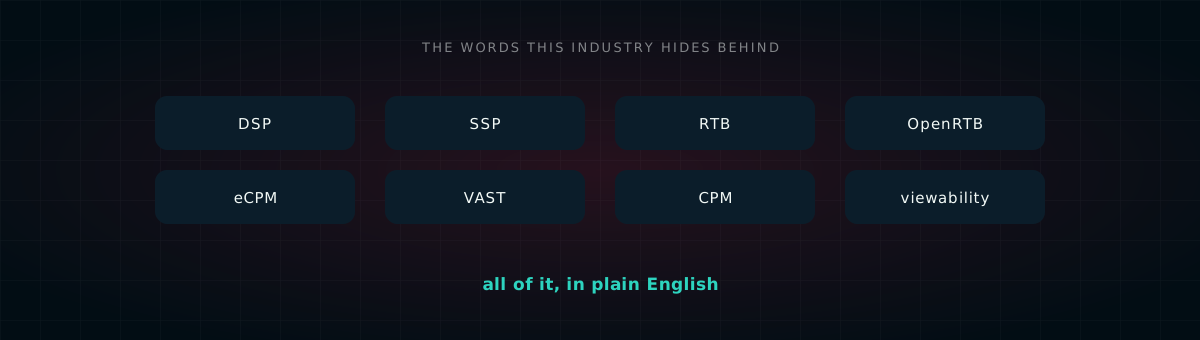
Six pieces, about half an hour in total. By the end you'll understand how an ad gets bought, how it gets aimed, and how you'd tell whether it worked.
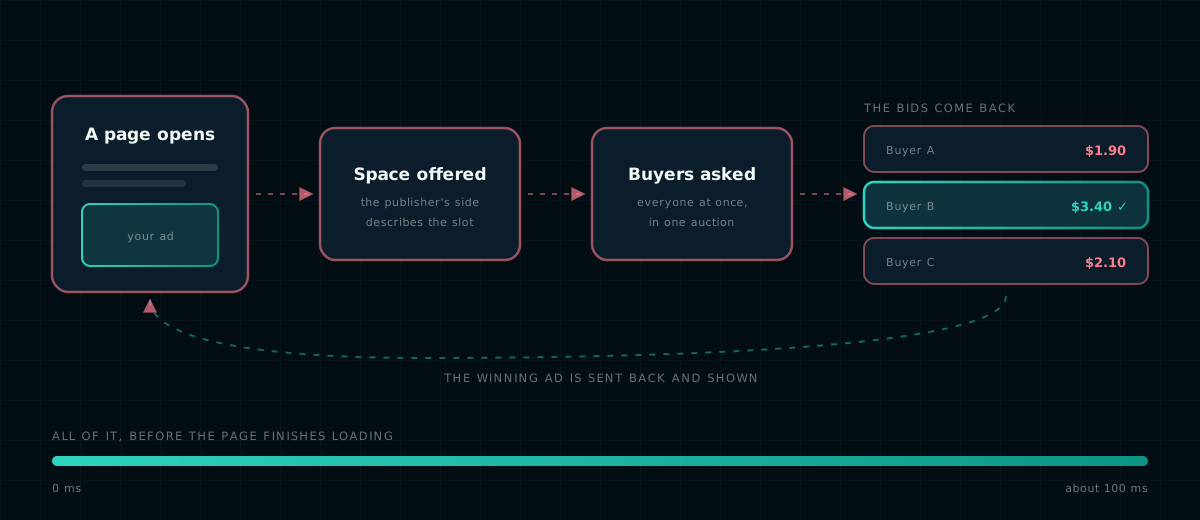
If you only take one thing from this page, take this. Everything in the path above is a closer look at one part of it.
The methods behind AI contextual targeting — and what the public research actually says about whether it works.
As third-party cookies fade, the data you own becomes the asset. How to put it to work.
How machine learning decides what to pay — prediction, bid shaping, and where the limits are.
Ads inside AI assistants, and agents that complete purchases. What it means for advertisers in Asia.
Written for engineers, but readable by anyone curious about what runs underneath. We publish our own architecture, our own measurements, and our own bugs — all of it collected in AdZoic Labs.
The stack, the system diagram, the security posture and the scaling approach — with a note on what we deliberately don't publish.
A retry delay meant to be random returned the same number every time — and the test we wrote for it passed.
A load test gates every merge. Reading our own report properly showed it was measuring the wrong thing.
There's a plain-English glossary of every term this industry throws around, and a short FAQ for the questions people actually ask. New pieces land on the blog — this page stays the way in.
If something here didn't land, tell us — we'd rather fix the explanation than have you nod along. And if you want to see it working on your own goals, we'll show you.
Talk to us