Inside the platform
The stack, the system diagram, the security posture and how we scale — with a section on what we deliberately leave out, and why.
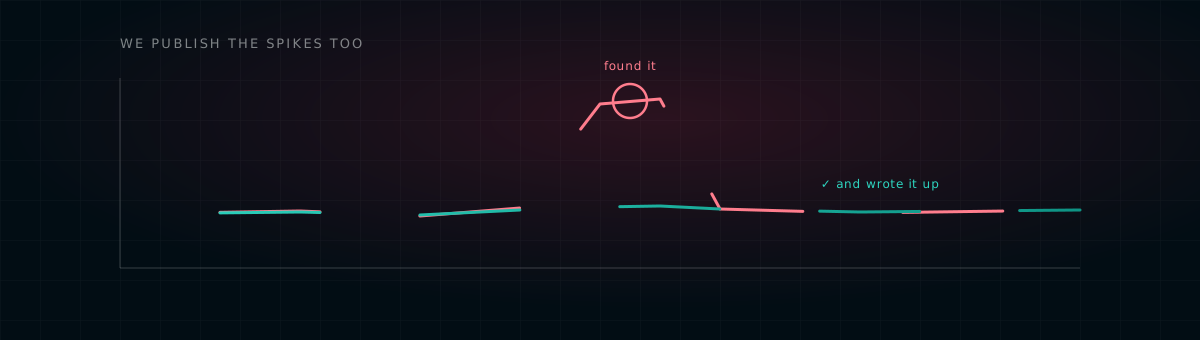
The engineering side of the company. We publish our architecture, the numbers we actually measure, and the bugs we find in our own code — including the ones nobody outside would ever have noticed. This page is where that work lives.
The loop is ordinary. The only unusual part is that the third step happens whether or not the news is good.
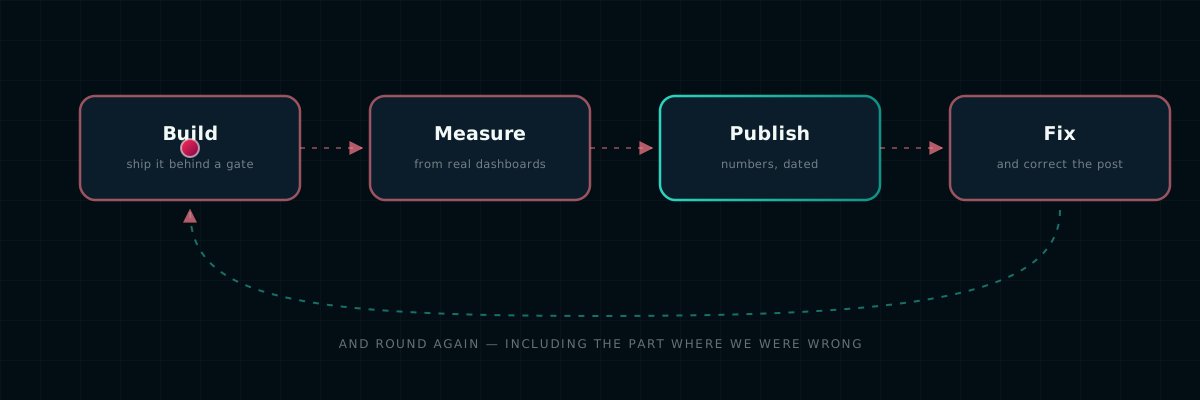
No number goes on this site unless someone can pull it from a dashboard on request. When we found a capacity claim on our own blog that was roughly ten times too high, we corrected the page and said so in public.
Performance numbers are a snapshot, not a service level. Every production figure we publish names the window it was measured in, because the honest answer to "how fast is it?" changes with the traffic.
If we find something broken in our own code, the write-up goes out — what it was, how it hid, and what we changed about testing so the next one is caught. A defect nobody hears about teaches nobody anything.
Some things stay in. We don't publish versions, endpoints, thresholds or security configuration, and we don't publish our fraud signals or bid-pricing logic. We'd rather name the gaps than pretend there aren't any.
The stack, the system diagram, the security posture and how we scale — with a section on what we deliberately leave out, and why.
A retry delay meant to be random returned the same number 100,000 times. The test we had written for it passed, comfortably.
A load test gates every merge. Reading our own report properly showed it had been measuring our rate limiter rather than our bidder.
Start with the plain-English path instead — it explains how ad buying works from the beginning, with no engineering assumed. New pieces from both tracks land on the blog.
If publishing your own postmortems sounds like a good way to work rather than an alarming one, we should talk. Everything above was built by a small team in Dhaka.
See open roles