For thirty years, digital ads were made for human eyes. In 2026, two new things happened. Ads showed up inside AI assistants. And AI assistants started buying things. When the click can come from a machine acting for a person, advertising changes. Here is what happened, what it means for advertisers, and why we think Asia may feel it early — in plain English, with sources.
What just happened
Three things, all this year, all announced in public:
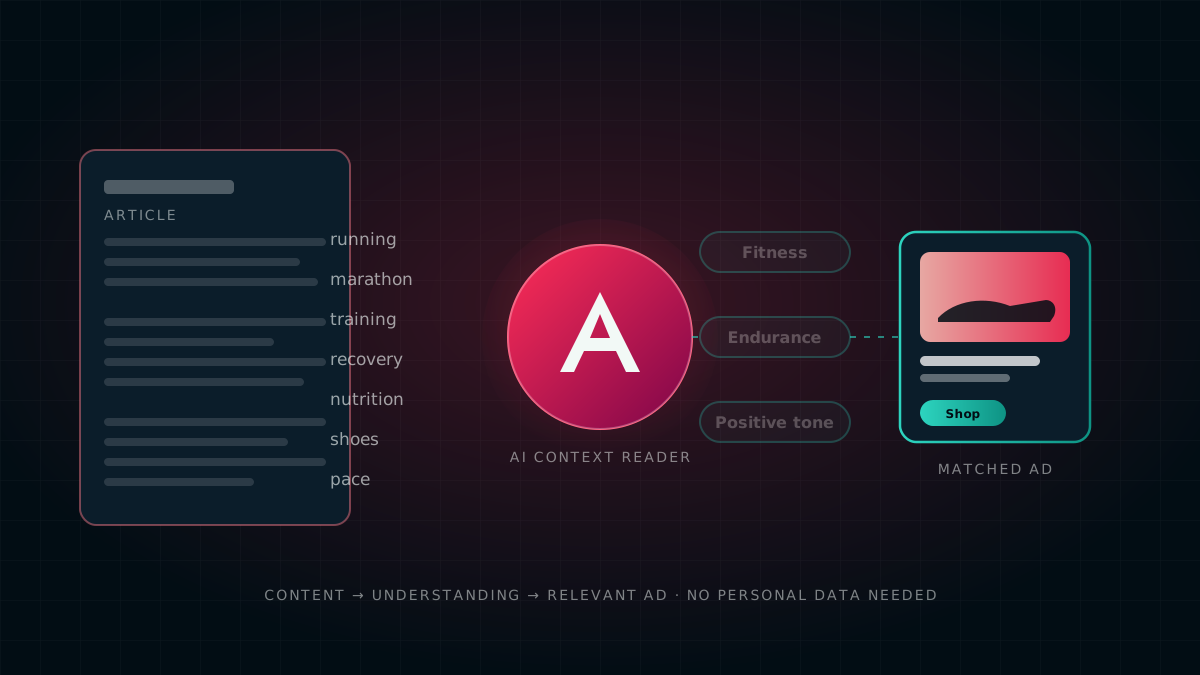
- Ads arrived in ChatGPT. In January, OpenAI said it would test ads in ChatGPT. It started in the US, on the free plans, for logged-in adults. The ads match the topic, sit under the answer, and are marked as sponsored. Advertisers see totals only. They never see your chats. In August the test reached five more countries — two of them in Asia: Japan and South Korea.
- Google taught assistants to shop. In May, Google launched Universal Cart — one cart that follows you across Search, Gemini, YouTube and Gmail. With it came a payment method that lets an AI assistant finish a purchase for you, inside limits you set: which brands, which products, how much money. You set the rules. The assistant does the buying.
- Amazon has been moving the same way, bringing its shopping helper and Alexa together into one AI shopping experience.
These are not lab demos. They are the biggest consumer platforms in the world, shipping real products.
An AI assistant is a new kind of audience. It does not look at your ad. It reads your information. You persuade a person. You convince a machine.
What "agentic commerce" means
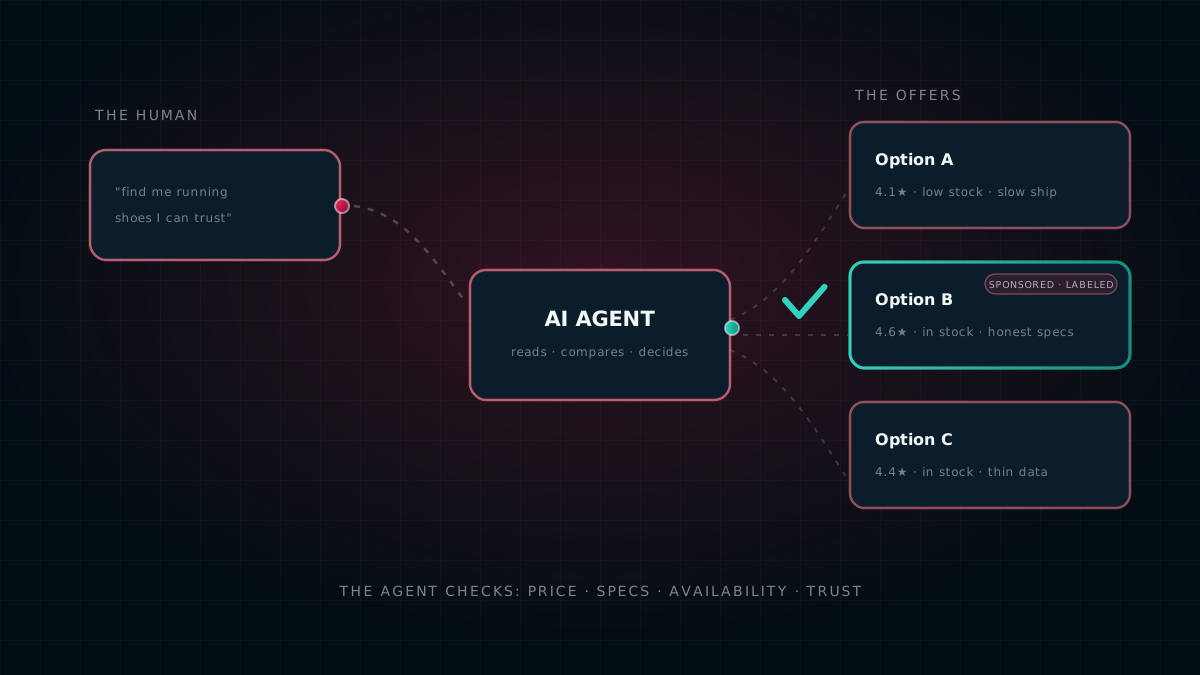
The phrase sounds harder than it is. It means this: you tell an assistant what you need — "find me running shoes I can trust, under my budget" — and the assistant does the work. It searches. It compares prices and reviews. It checks what is in stock. And if you allow it, it pays.
The click did not die. It moved. The person still decides what they want. But more often now, the machine decides which option gets the money.
That second decision is the one advertising has always competed for. So the question to ask is simple: when an assistant compares my product with two others, what does it find?
What changes for advertisers
1. You now have two audiences
People respond to a story, a feeling, a brand they know. Machines respond to facts: price, size, colour, what is in stock, how fast it ships, review scores, return rules. They read those facts from your product data. If that data is thin, old or wrong, the machine cannot see you — no matter how good your ad looks.
2. Being the answer beats interrupting the answer
Ads inside assistants are marked and kept apart from the answer. In a chat there is no page margin to sit in, and no second chance. The ad that wins is the one that really answers the question. That is contextual advertising taken to its end point — the same idea behind how our targeting already works: match the moment, not the person.
3. Brand ads matter more, not less
Here is the part most people miss. Assistants follow the rules people give them — "only brands I trust", "the usual one". Those preferences are formed before anyone asks the question. They come from years of brand advertising, good products and word of mouth. So in a world of assistants, your brand is the short list. Awareness campaigns do not stop mattering. They decide which two or three options the machine compares at all.
4. Measurement gets less personal — which is where things were going anyway
Advertisers in ChatGPT get totals, not person-by-person tracking. That sounds a lot like where privacy law was already pushing everyone: consent-first rules across Asia, and first-party data as the asset you keep. The assistant era and the privacy era point the same way. Own your customer relationship. Stop depending on following people around.
Why Asia may feel it early
This region already shops through conversations. Ordering in a chat app, buying inside a super-app, closing a sale in a message thread — that is normal here, not a novelty. An assistant that finishes the purchase is a short step from a sale that already happens in a chat. Add young, mobile-first populations, and the fact that ChatGPT's first wave outside the West already includes Japan and South Korea, and it is fair to expect this to feel natural here early.
That last part is our opinion, and we are labelling it as one. But it is the direction we are planning for.
The good-bot problem
One more effect, and to us the most interesting one.
Ad tech spent years building defences against traffic that is not human — bots that fake views and clicks to steal budgets. Blocking that traffic is a core job of any serious platform. But an assistant shopping on a real person's instruction is also not human — and it stands for a real customer.
So the industry now has to tell a helpful bot from a harmful one. Payment rules with limits set by the user are an early part of the answer. Clear labelling will be another. Nobody has solved this yet. It is going to be one of the big engineering problems of the next few years, and we say that as people who build this kind of machinery for a living.
What we are doing at AdZoic
We will be straight about where we stand:
- Today, our job has not changed. We run real-time auctions that put ads in front of people, and we treat unknown automated traffic as invalid. Nothing about that changes this quarter.
- We are watching the rules take shape. How assistants identify themselves, how they are allowed to pay, what an ad looks like inside a chat — all of this is being decided right now, in public. We follow it so our customers do not have to.
- We are helping clients get ready in ways that pay off today. Clean, complete, honest product data helps you in Google's AI-driven campaigns right now, and makes you readable to assistants later. Brand campaigns build the trust those assistants will follow. Your own customer relationships survive every platform change. None of this is a bet on a future that may not arrive. It is good practice that also happens to be the ticket in.
If you want to think through what this means for your business, talk to us. We enjoy this conversation.
The facts above come from public announcements, linked in the text: OpenAI's "Testing ads in ChatGPT" and "Our approach to advertising" (January 2026), the rollout reported by TechCrunch and Digiday (August 2026), and Google's Universal Cart announcement (May 2026) with coverage from TechCrunch. The line about Amazon is based on industry reporting rather than a single company announcement. Company and product names are used only to describe what those companies have said publicly; we are not connected to them, and nothing here is an endorsement either way. The products shown in the banner are made up. Where we give an opinion — like Asia adopting this early — we say so. We do not publish invented numbers, here or anywhere on this site.