On 24 September 2026, Bangladesh Bank issued letters of intent to five proposed digital banks — DK Digital Bank, bKash Digital Bank, Nova Digital Bank, Boost Digital Bank and Kori Digital Bank — clearing them to prepare for fully online operations. Under Bangladesh's rules a digital bank has a head office and no branches; everything happens in an app or on a website. Asia has been here before, in Hong Kong, Singapore, Malaysia, the Philippines, Pakistan and Thailand, and every launch has taught the same lesson: a bank with no branches has exactly one storefront, the phone, and every customer has to be found, convinced, verified and funded through it. This is a playbook for that job — how to reach people, what campaigns look like at each stage, how to measure a deposit rather than a click, and where a platform like ours fits. It is written for bank marketing teams and the agencies that serve them. It is not regulatory advice.
Where Asia's branchless banks are
| Market | When | What was granted |
|---|---|---|
| Hong Kong | 2019 | Eight virtual bank licences |
| Singapore | Dec 2020 | Four digital bank licences: two full, two wholesale |
| Malaysia | Apr 2022 | Five digital bank licences |
| Philippines | 2021; reopened Jan 2025 | Six digital banks licensed; the pause on new ones lifted, with room for up to ten |
| Pakistan | 2023 | Five in-principle approvals for digital retail banks |
| Thailand | Jun 2025 | Three applicants approved; each must open within a year |
| Bangladesh | Sep 2026 | Five letters of intent |
From the regulators' own announcements and the press reports listed at the end. A letter of intent or an in-principle approval is not a licence: it sets conditions a bank must meet before it can open.
The pattern is consistent. Regulators license a handful of banks at a time, give them a deadline to become operational, and expect them to reach people the existing banks don't — small businesses and underserved communities. That is a marketing brief as much as a banking one.
What changes when there is no branch
- The app store is the branch. Nobody walks in. A customer discovers the bank through an ad, a search, a friend or a headline — or not at all. IAB made the same point to US regulators in 2024: digital advertising is how consumers find and understand online banking services.
- Trust has to be built before the tap. A branch on a main road is a trust signal. A bank without one earns trust with its story, its reviews and its explanations, and video does most of that work. Even in the mature US market, IAB reports digital video spend passing $80 billion in 2026 and still outgrowing the wider ad market.
- Onboarding is an identity check, and identity checks lose people. Every step between “install” and “account open” is a place people drop out. If you don't measure each step, you will blame the ads for a broken document-photo screen.
- The first deposit is the real conversion. An install is not a customer. An empty account is not a customer. Optimise toward installs and you will get installs.
- It is a restricted category. The major ad platforms treat financial products as restricted, and the regulator that licensed the bank has rules on how it may market. The bank's compliance team owns every claim in every ad.
- Some new banks arrive with owned channels. Where a bank is promoted by a telecom operator or a mobile-money provider, it can reach its own base for nothing. Paid media's job is then reach beyond that base, and honest measurement of it.
One customer, four moments
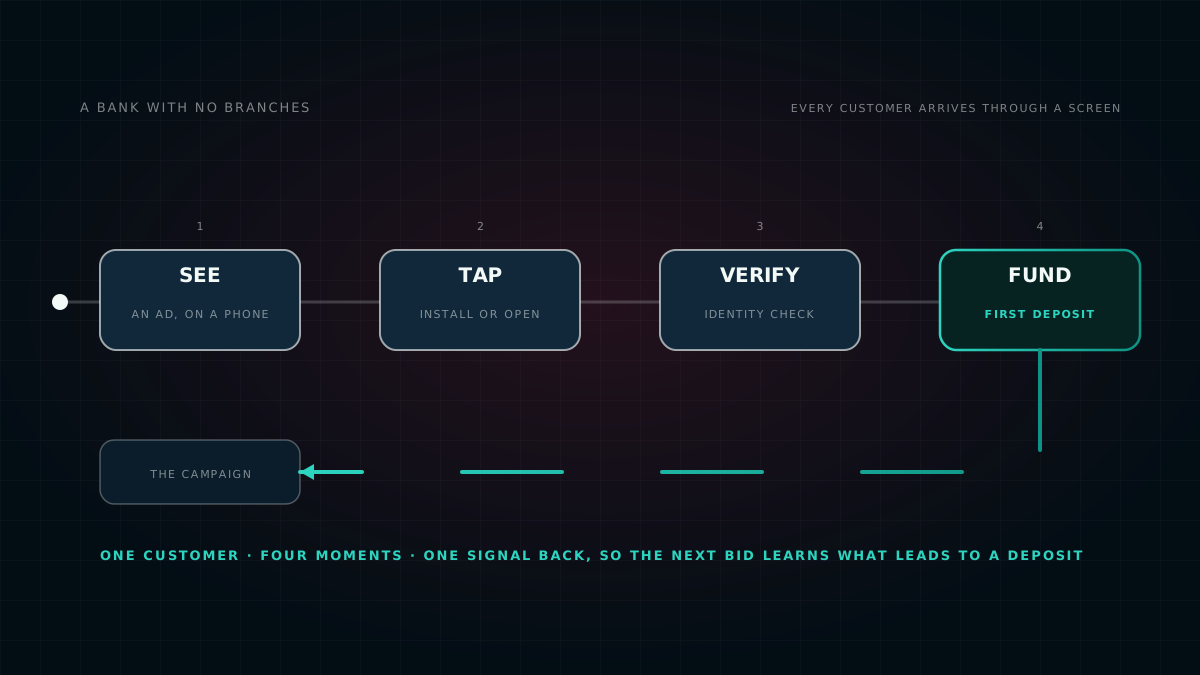
Every customer a branchless bank will ever have passes through the same four moments. Each has a number worth watching, and a way it usually goes wrong.
- See. The ad, on a phone. Watch: verified impressions (not billed ones), reach, and how often the same person sees it. Goes wrong: bots, slots nobody can see, ads next to scams.
- Tap. Install the app or open the page. Watch: taps that become installs, and how long the page took to load. Goes wrong: a broken link into the app store, a listing in the wrong language, a landing page that takes four seconds.
- Verify. The identity check. Watch: checks started against checks completed, and which step loses people. Goes wrong: the ad can't fix a bad camera screen — but it can tell you which placements send people who never finish.
- Fund. The first deposit, then the first payment. Watch: cost per funded account, and days from install to deposit. This is the number the whole plan is bought against.
There is a fifth moment, return — the second month, the next product — and it belongs to the bank's own consented audiences rather than to prospecting. It comes last in the plan below.
Reach: where people actually are
They are on phones. DataReportal counts 82.8 million internet users in Bangladesh at the end of 2025, 47 per cent of the population, and 64 million social media user identities; the regional picture is similar. And the money is moving: Sensor Tower's July 2026 report shows banking-app advertising spend rising by roughly half between early 2024 and early 2026 across the markets it tracks, with one Southeast Asian digital bank's app downloads more than tripling in the same period.
For a bank, the channels split by job:
- Online video and YouTube build trust — the story of the bank, and a plain “how to open an account in two minutes”.
- Search catches intent — people already looking for a digital bank, a savings rate, or how to open an account online.
- Mobile in-app and mobile web give reach and frequency at a lower price, across the news, sport, entertainment and utility apps people actually spend their day in.
What works for targeting a bank without third-party cookies is the boring, durable kind:
- Context. Business, personal-finance, jobs, e-commerce and remittance content — in the languages people read. In Bangladesh that means Bangla, not only English.
- Geography. The cities you launch in first, and a radius around the places where you are running launch events or partner points.
- Device. Only the operating systems your app exists for. It sounds obvious; it is the most common wasted impression on an app launch.
- Your own audiences, with consent. Waitlist sign-ups, existing customers of a sponsor's other services where they have agreed, and lookalikes built from them.
- Retargeting, with a cap. People who started and didn't finish — and a frequency limit, because a bank ad seen thirty times is a complaint, not a customer.
What doesn't belong in the plan: targeting on sensitive characteristics — income, religion, health, ethnicity or anything like them. It is not needed, and in a regulated category it is a risk the bank's compliance team will not thank you for.
Campaigns by phase
| Phase and goal | What runs | What to watch |
|---|---|---|
| Before launch — be known; build a waitlist | Video and contextual awareness; Search on the brand and on “digital bank” terms; a waitlist page | Verified reach; growth in brand searches; waitlist sign-ups |
| Launch, first 30 days — installs that become accounts | Install campaigns in-app and on mobile web; YouTube; Search; retargeting of visitors who didn't finish | Cost per account opened; share of identity checks completed |
| Activation, days 30–90 — first deposit, first payment | Retarget verified-but-unfunded accounts (with consent); creative about the first thing to do with the account | Cost per funded account; days to first deposit |
| Ongoing — retain, cross-sell, win back | Consented first-party audiences; frequency caps; product campaigns cleared by compliance | Funded accounts still active; repeat activity |
| Always on — protect the brand and the budget | Pre-bid brand safety, fraud filtering, independent verification | Invalid-traffic rate; viewability; the placement list |
The phases overlap; a bank in month four is still prospecting. What changes is the number the budget is judged by.
A published example of the shape: DBS SME Banking's entry to the IAB Hong Kong Digital Awards 2024 describes an account-opening campaign that put about 70 per cent of its media into prospecting and 30 per cent into retargeting people by how recently they had visited and what they had done, and reports a 45 per cent lower cost per account opening in one of its markets. Those are the entrant's own figures, offered here as an illustration of the structure, not as a benchmark.
Conversion: measure the deposit, not the click
Decide the one number before the first ad runs: cost per funded account. Everything above it in the funnel is a diagnostic, not a goal.
| Stage | Counted by | Use it to |
|---|---|---|
| Impression | The ad platform, then an independent tracker | Check what you paid for was seen by a person |
| Click or tap | The ad platform | Spot broken links and slow pages |
| Install or first open | The app, reported back | Compare placements |
| Application started | The bank, reported back | Find where people drop out |
| Account opened and verified | The bank, reported back | Cost per account |
| First deposit | The bank, reported back | Cost per funded account — the goal |
“Reported back” is the part that worries a bank, and it should. Here is how it works on our platform. On the web, a small piece of code on the “account opened” page tells us an event happened. For events that happen inside the app or inside the bank's own systems — verification complete, first deposit — the bank's server sends us the event directly. In both cases what crosses is an event name and the click identifier it came from, so we can tie it to the ad and the bid. No name, no ID number, no balance, no transaction. The customer stays with the bank.
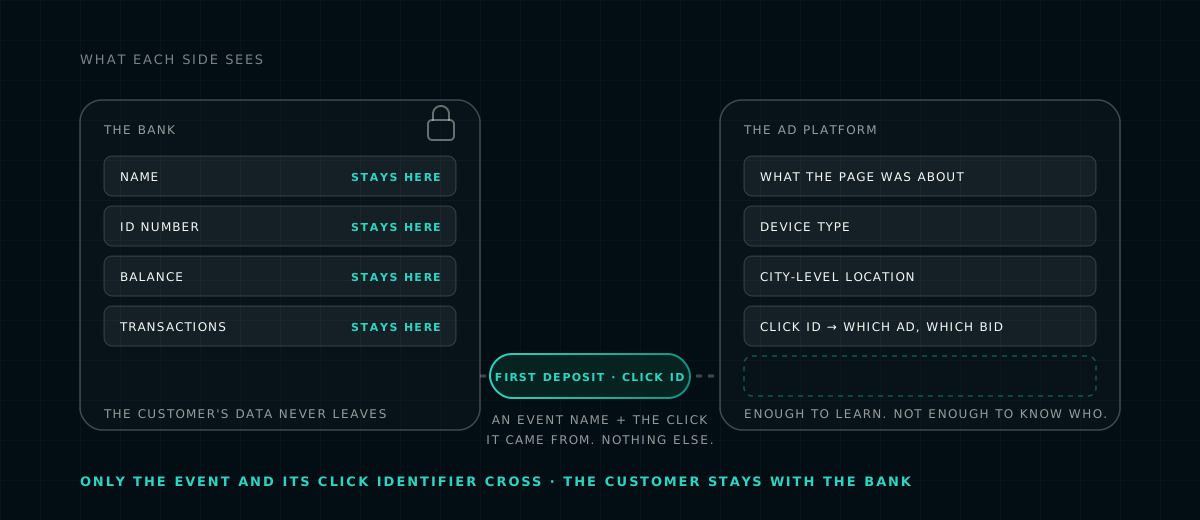
The boundary between a bank and its ad platform. The platform learns which ad and which bid led to a deposit; it never learns who made it.
Three habits keep the number honest:
- Name the events the way the bank thinks. Application started, account opened, install, first open, and first deposit as a custom event. Our conversion tracking supports each of these, by page code or by server call.
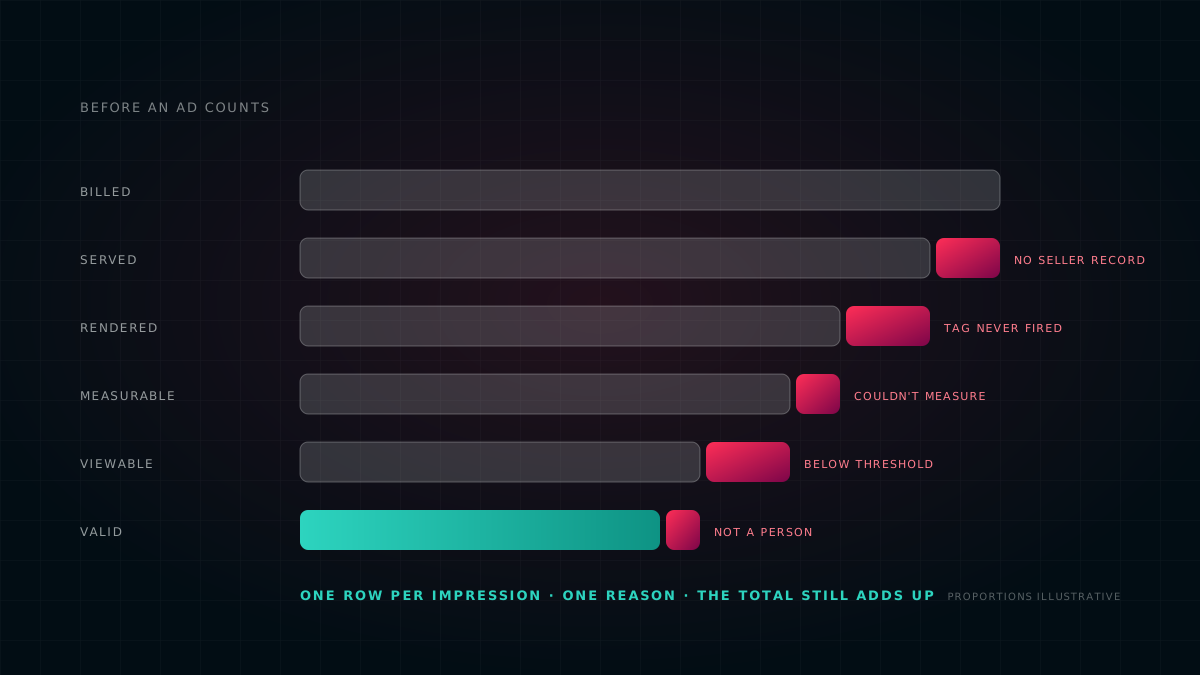
- Report the unmatched as unmatched. Some conversions can't be tied to a click — a parameter stripped by a redirect, a person who saw the ad on one device and opened the account on another. Report them as unmatched. Don't model them into the total; a modelled number is indistinguishable from a real one once it is in a spreadsheet. What has to be true before an impression counts explains the standard we hold ourselves to.
- Optimise toward the deposit. Our models score every impression by how likely it is to lead to the goal you set. Set the goal to funded accounts and the bids follow; set it to installs and you will pay for installs.
Trust, compliance and privacy
Financial advertising is a restricted category everywhere it runs, and a digital bank meets that on two fronts at once: the regulator that licensed it, and the platforms that carry its ads.
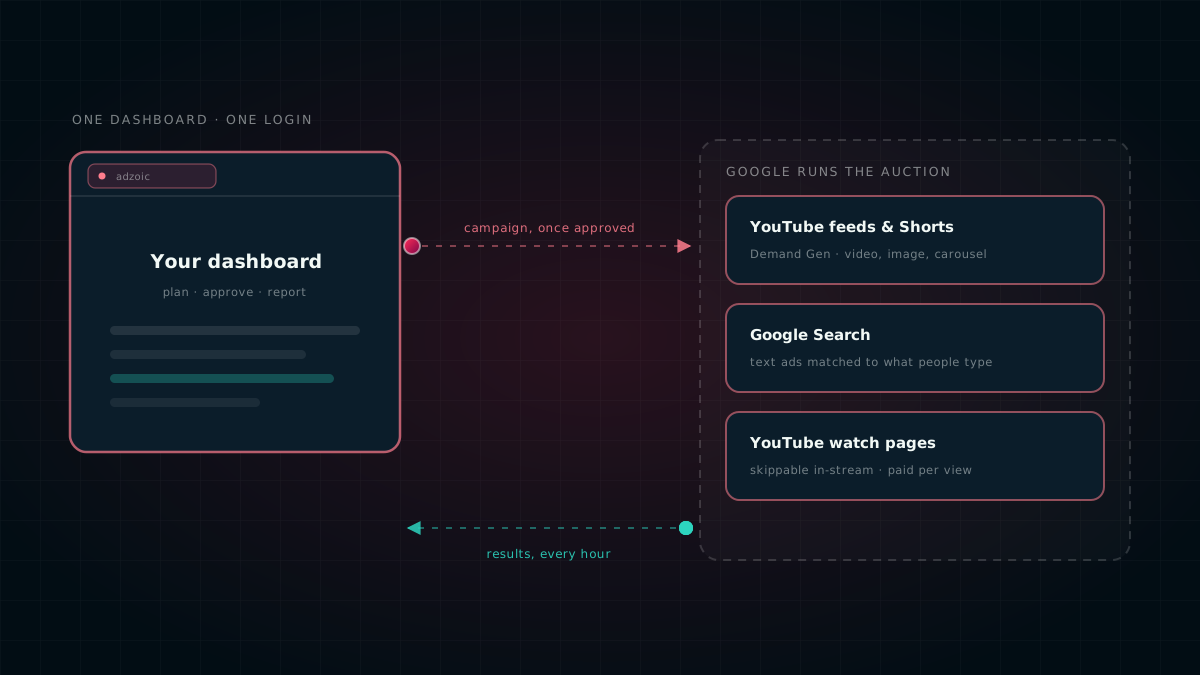
- The platforms' rules. Google requires financial-services advertisers to be verified in some markets — Malaysia's requirement has been enforced since April 2026, and Singapore has its own — and requires loan ads to show repayment terms and a representative cost on the landing page, “clearly and immediately visible”. Meta requires ads for credit, loans and insurance to be shown only to people aged 18 or over, and may require the advertiser to prove it is authorised. When a bank buys YouTube or Search through AdZoic, it does so through its own Google Ads account, so Google's financial-services requirements apply to that account exactly as they would otherwise.
- The regulator's rules. A letter of intent comes with conditions, and every regulator in the table above has rules on how banks may advertise. Which claims can be made, which disclaimers are required and in which language are compliance decisions. Build the review into the creative process, not after it.
- Brand safety. A bank's ad next to a fake loan app, a get-rich-quick page or pirated content damages the one thing a branchless bank has to sell. We check the placement before we bid, not after the money is spent. Brand safety 101 covers what gets filtered.
- Fraud. A bot cannot open a bank account, so fraud looks harmless for a bank — until you notice it eats the budget and teaches the optimiser that the placements bots visit are “good”. Invalid traffic is filtered before bidding, and we run an independent tracker on our own campaigns.
- Privacy. No third-party cookies; targeting by context, geography and consented first-party audiences; only an event and a click identifier ever crossing from the bank to us; and consent before an existing customer is retargeted. Why first-party data is your edge covers the consent side.
Where AdZoic fits
We are an AI ad-buying platform built in Dhaka for Asia only, and this is the work we are built for. In plain terms:
- One plan, one budget, one report. Mobile in-app, mobile web and online video across the open exchange, plus YouTube, Search and Demand Gen through your own Google Ads account — planned together, with one definition of a conversion.
- Every impression reported, and checkable. We track down to the impression, run a verification tracker on our own campaigns, and publish how we count. So your compliance team can see how each number was counted.
- Conversions the way a bank thinks. Application started, account opened, install, first open, first deposit — by page code or server call, carrying only the event and the click identifier.
- Models that buy toward the deposit, and explain each move in plain words rather than a black box.
- Brand safety and fraud filtered before the bid, not refunded after it.
- A team based in the region — in Dhaka, working in Asian hours.
- Reports written in plain language, with billing in the same place.
And two things we don't do, so you can plan around them. We don't buy Meta's inventory; keep that with your agency, and compare the two on verified numbers. And we are newer and smaller than the global platforms — we publish our own numbers on Labs, corrections included, so you can judge that for yourself.
The first ninety days, on one page
- Sixty days out. Complete the ad platforms' financial-services verification in every market you will run in. Define the conversion events with the bank's product and compliance teams. Wire up tracking and test it end to end with a real account. Write the creative in every language you will serve, and get it cleared.
- Thirty days out. Start video and contextual awareness. Own the brand searches. Build brand-safety and placement lists. Open the waitlist.
- Launch. Install and account-opening campaigns across in-app, mobile web, YouTube and Search. Retarget the unfinished. Read the identity-check completion rate every day; it will tell you more than the click-through rate.
- Thirty days in. Move the budget's yardstick to cost per funded account. Cut the placements that produce installs which never verify. Start activation creative for the verified-but-unfunded.
- Ninety days in. Retention with consented audiences. Re-forecast on real numbers, not launch assumptions. Write down what you learned, with the figures, so the next product launch starts from evidence.
When there is no branch, the campaign is the front door and the deposit is the only receipt. Buy toward the deposit, verify what you bought, and keep the customer's data where it belongs — with the bank.
Common questions
What is a digital bank?
A bank licensed to operate without branches. Customers open accounts, deposit, pay and borrow through an app or a website. Regulators across Asia — Hong Kong, Singapore, Malaysia, the Philippines, Pakistan, Thailand and now Bangladesh — have licensed them in small groups over the last few years.
How is advertising a digital bank different from advertising a traditional bank?
There is no branch to send people to, so the whole customer journey — discovery, trust, sign-up, identity check, first deposit — happens on a screen, and every step of it can and should be measured. The goal is a funded account, not a visit or an install.
What should a digital bank measure?
One number above all: cost per funded account. Below it, the diagnostic steps — verified impressions, taps, installs, applications started, identity checks completed, accounts opened — each tells you where people drop out and which placements deserve the budget.
Can a bank advertise effectively without third-party cookies?
Yes. Context (the content a person is reading), geography, device, and the bank's own consented audiences do the work, and none of them depends on a third-party cookie. AdZoic doesn't require one.
Does the ad platform see the bank's customer data?
No. When a conversion is reported back, what crosses is an event name and the click identifier it came from, so the platform can tie it to the ad and the bid. The customer's name, ID number, balance and transactions stay with the bank.
Which channels can a digital bank run through AdZoic?
Mobile in-app, mobile web and online video across the open exchange, plus YouTube, Search and Demand Gen through the bank's own Google Ads account, all from one plan. We don't buy Meta's inventory; that stays with the bank's agency.
Are financial ads restricted?
Yes. Google requires financial-services verification in some markets and immediate disclosures for loan ads; Meta requires credit, loan and insurance ads to be shown only to adults and may require proof of authorisation. The bank's regulator has its own marketing rules. The bank's compliance team owns every claim.
The banks named in this post are named from public reporting of their regulators' decisions. None of them is a client or partner of AdZoic, none has been consulted, and nothing here describes their plans. Regulatory facts come from the regulators' own announcements and the press reports listed below, and are not legal or regulatory advice; a bank's compliance team and counsel own those decisions. Market figures are quoted from the named sources. The DBS example is the entrant's own award submission, quoted for its structure, and is not an endorsement by or of AdZoic. We publish no performance figures of our own here, and no client, partner or advertiser data. The cover and diagram are illustrations, not data. Google, YouTube, Google Ads and Demand Gen are trademarks of Google LLC; Meta and Facebook are trademarks of Meta Platforms, Inc.; they are used only to identify those services.
Sources
- Five digital banks get initial nod from Bangladesh Bank — The Daily Star, 24 September 2026.
- Granting of virtual banking licences — Hong Kong Monetary Authority, May 2019.
- MAS announces successful applicants of licences to operate new digital banks — Monetary Authority of Singapore, 4 December 2020.
- Five successful applicants for the digital bank licences — Bank Negara Malaysia, 29 April 2022.
- BSP lifts ban on new digital banks — Philstar, December 2024.
- The State Bank of Pakistan awards in-principle approval to five digital retail banks — FinDev Gateway, 28 September 2023.
- Announcement of successful applicants to establish a virtual bank — Bank of Thailand, 19 June 2025.
- Digital 2026: Bangladesh — DataReportal.
- State of Digital Banking 2026 — Sensor Tower, July 2026.
- 2026 Digital Video Ad Spend & Strategy Report — IAB, July 2026.
- Digital advertising vital to consumer financial services — IAB, January 2024.
- IAB HK Digital Awards 2024: DBS Online Business Account Opening campaign — IAB Hong Kong.
- Financial products and services policy and verification requirements, April 2026 update — Google Ads policy help.
- Financial and insurance products and services — Meta advertising standards.